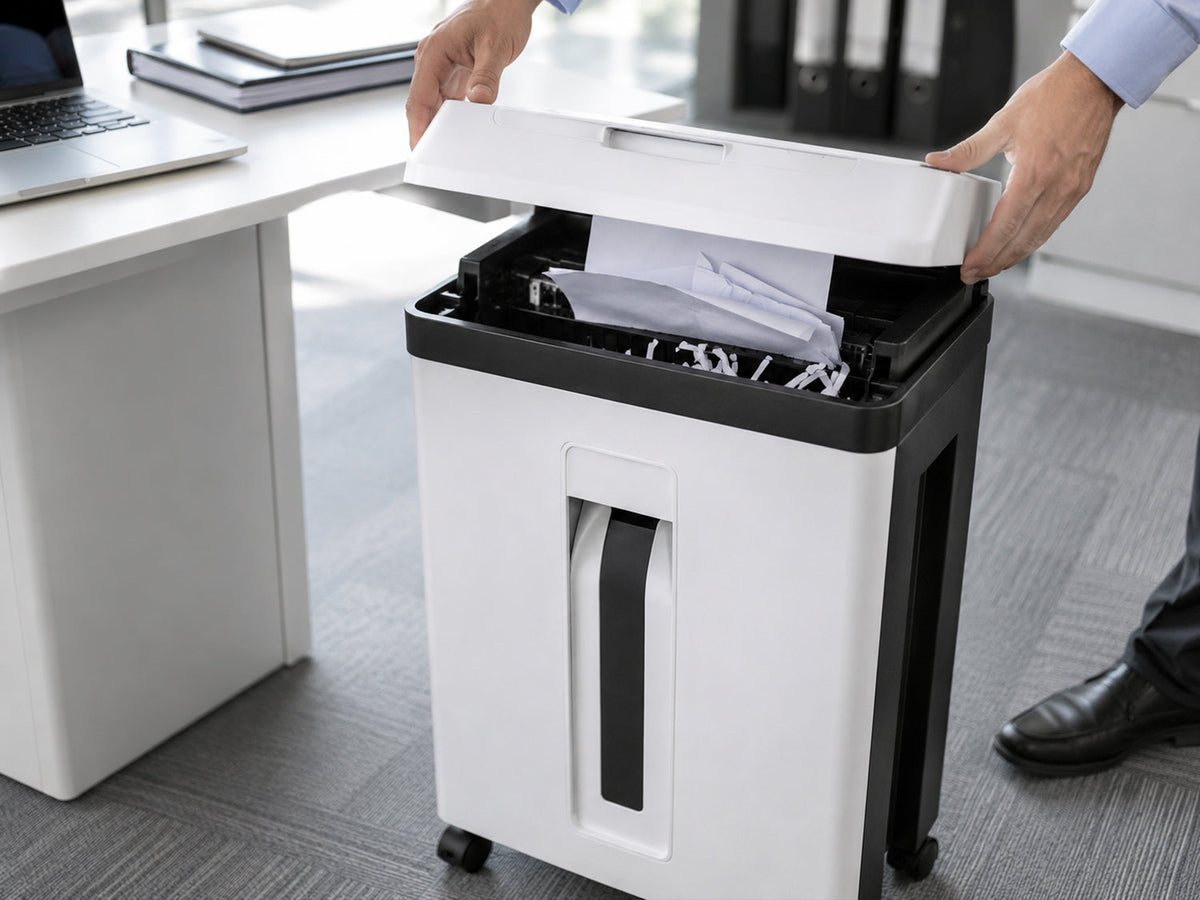
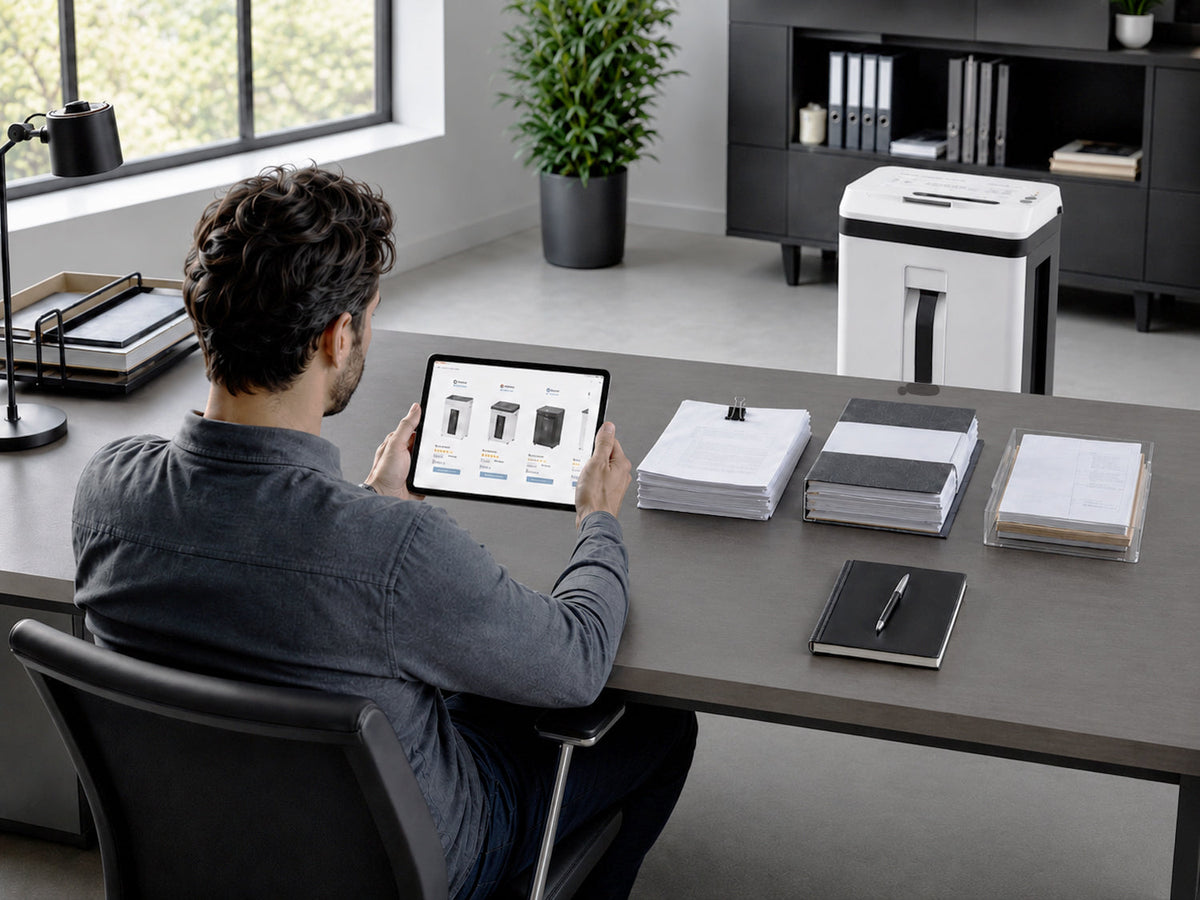
Faced with a vast array of shredders on the market, how do you choose a model that meets both your office needs and is suitable for home use? This blog will cover the working principles, classifications, and key purchasing considerations of shredders to help you easily find the most suitable model, protect your information security, and make your work and daily life more convenient and efficient.
I. How Shredders Work and Their Categories
Shredders, though seemingly simple devices, actually incorporate complex technology. From the earliest mechanical shredders to today’s popular electric models, their operating principles have evolved from manual cutting to automatic feeding and smart controls. Based on shredding methods, shredders are primarily divided into three types: strip-cut, particle-cut, and cross-cut. Of these, strip-cut shredders are suitable for the destruction of everyday documents, while particle-cut or cross-cut shredders are better suited for handling sensitive information, offering a higher level of security.
In addition, shredders can be categorized by usage scenario into two types: office-specific and home-use. Office shredders are typically larger in size and have greater processing capacity, making them suitable for the rapid processing of large volumes of documents; home shredders, on the other hand, are more compact and portable, catering to the needs of households for destroying small quantities of documents.
II. Key Considerations for Choosing a Paper Shredder
When selecting a paper shredder, there are several key factors to consider. First is shredding capacity, which includes the maximum paper thickness the shredder can handle and the number of sheets it can process at once. For offices, choosing a shredder capable of processing more sheets at a time can significantly improve work efficiency. Second is shredding effectiveness; different shredding methods directly impact the level of information security. For example, particle-cut shredders provide a higher level of security than strip-cut shredders.
Additionally, noise level is an important consideration. Especially for home shredders, quiet operation minimizes disruption to family members or neighbors. Another factor is the shredder’s size and capacity; choose a model that fits your workspace while ensuring the waste bin has sufficient capacity to reduce the frequency of emptying.
III. Recommended Shredders for Offices and Homes
For office needs, we recommend shredders with high processing capacity, low noise levels, and strong security features. Models like the OL289 and OL287, for instance, can handle large volumes of paper at once while effectively preventing information leaks, making them ideal for business use. For home users, a compact and easy-to-operate shredder is a better choice.
When making a purchase, familiarize yourself with the actual specifications of different models and select one based on your specific needs. Additionally, considering long-term usage costs, the shredder’s power consumption and ease of maintenance are factors that should not be overlooked.
IV. Tips for Using and Maintaining Shredders
To extend the lifespan of your shredder and maintain optimal performance, proper usage and regular maintenance are crucial. First, avoid feeding non-paper items such as plastic or metal into the shredder, as these can damage the internal blades. Second, regularly empty the shredded paper from the waste bin to ensure the machine runs smoothly. Finally, if you won’t be using the shredder for an extended period, remember to unplug it and store it in a dry, well-ventilated area.
With the information provided above, we hope you now have a more comprehensive understanding of how to select and use a paper shredder. Whether in an office or at home, choosing the right paper shredder can not only improve work efficiency but also effectively protect your information security.